A New Iranian Revolution?
Amid deepening economic crisis, rising popular discontent, and mounting US pressure, the odds appear to be stacked against the Islamic Republic. Unless Iran's ruling regime embraces a more moderate approach, it may soon face collapse, with destabilizing effects on the entire region.
EL AVIV – All revolutions have expiration dates. The regimes they establish either end in collapse, as the Soviet Union did in 1991, or evolve into a different political-economic system, as the People’s Republic of China did after Deng Xiaoping’s “reform and opening up” began in 1978. Whether or not Iran’s Islamic Republic survives the crisis it currently faces, it will not escape this iron law of revolutions: evolve or die.
The Ages of Revolution
But regimes born of revolutions have more in common than how they end. The first generation embodies the revolutionary spirit and often a sense of moral responsibility, which encourages sacrifice in the name of a higher cause.
The second generation inherits all the power, but not necessarily the revolutionary fervor. It tends to do the work of transforming an ideological movement into an institutional and bureaucratic order. The decade-long Mexican Revolution, for example, gave rise to the Institutional Revolutionary Party (PRI), which ruled from 1929 to 2000.
The third generation is even further removed from the ethos of sacrifice that animated the revolutionaries that preceded them. Leaders recite hollowed-out versions of the revolutionary liturgy, while enjoying tremendous privileges. Often, increasingly centralized, coercive rule comes to resemble the old regime – and may trigger popular alienation or even resistance.
Sometimes, this pattern is interrupted, or followed, by some version of reform. As the Harvard historian Crane Brinton observed in 1938 in The Anatomy of Revolution, the fissures between moderates and radicals begin to appear almost immediately after the “honeymoon period” of revolutionary unity. Forces representing idealism, extremism, and moderation can vie for primacy for as long as the regime remains in power.
Consider the French Revolution. In its early days, it promised universal emancipation, reflected in the Declaration of the Rights of Man and of the Citizen. But extremists soon gained ground and, with the support of the masses, executed the king. As Alexis de Tocqueville explained in 1856, the revolutionary regime proceeded to replicate the destruction of liberty and intermediary institutions carried out by those it had overthrown. This gave way to the Thermidorian Reaction, which began with the ousting of Maximilien Robespierre, and marked a return to moderation.
The Bolshevik Revolution followed a similar trajectory. The chaos of civil war gave way to Vladimir Lenin’s New Economic Policy, which sought to restore market mechanisms. This was then followed by Joseph Stalin’s forced collectivization and reign of terror, and then Nikita Khrushchev’s revisionism.
Such shifts can happen even under a single leader. After Mao Zedong, the father of China’s 1949 Communist Revolution, implemented the catastrophic Great Leap Forward, leading to more than 20 million deaths, a crop of more pragmatic officials and bureaucrats attempted to implement more moderate policies aimed at restoring the economy. Mao’s frustration with these policies, which he believed ran counter to the revolution’s ethos, spurred him to launch his own reign of terror, the Cultural Revolution.
In 1978, Deng took power and laid out a visionary strategy for China’s “peaceful rise,” based on a set of reforms that would give rise to a state-capitalist economy under the strict control of the Communist Party of China. This set the stage for the revolutionary regime’s transformation, though Chinese President Xi Jinping now appears to be leading a kind of backlash against this approach, as he embraces repression at home and a more muscular posture abroad.
Death or Renewal?
The Islamic Revolution has not broken the mold. Having toppled the pro-Western monarchy in 1979, the new Islamic Republic sought to build a progressive, corruption-free state which respected democratic values, human rights, and social justice. The first prime minister, Mehdi Bazargan, also wanted to avoid a confrontation with the United States. Fearing that the 1979 hostage crisis at the US embassy would undermine this objective, he worked to find a resolution.
But US President Jimmy Carter’s administration failed to recognize these signals, and regarded the new Iranian regime as entirely hostile. This played into the hands of Iran’s more radical cohort, backed by Supreme Leader Ayatollah Ruhollah Khomeini, who resisted any semblance of moderation, particularly when it came to the West. After all, they argued, the Islamic Revolution would not have been necessary had the US and Britain not ousted Mohammad Mossadegh, Iran’s democratically elected prime minister, in 1953, allowing the Shah to return to power.
The radicals won. Within a year, Bazargan resigned, and a new constitution was approved, officially establishing Iran as a theocracy under Khomeini’s absolute authority. The new Iran was defined by anti-imperialist nationalism and moral absolutism. The ethos of sacrifice also remained salient, especially after the Iran-Iraq War (1980-88), during which hundreds of thousands of Iranians were killed.
The second revolutionary generation, under Supreme Leader Ayatollah Ali Khamenei, built a bureaucracy, underpinned by religious coercion. As Khomeini reportedly said, “Islam is either political or nothing.” Throughout this process, however, the Islamic Republic behaved much like the cruel regimes that preceded it. As was true under the absolutist monarchy of the Pahlavi dynasty, which seized power in 1921, dissent was brutally crushed, torture and execution were commonplace, and the economy was controlled by the regime’s most militant loyalists.
Following the iron law of revolutions, the Islamic Republic will eventually – and perhaps imminently – reach a fork in the road. The question is whether it will collapse, like the Soviet Union, or morph into something new, like the People’s Republic of China.
A military defeat would make the former outcome more likely. While the French Bonapartists regarded wars of conquest as a means of defending the revolution at home, Napoleon’s defeat in Russia and at Waterloo signaled the end of the revolutionary era.
Similarly, Stalin harnessed the momentum of World War II – and the Soviet Union’s key role in defeating Nazi Germany – to build a protective buffer of communist satellite states around the revolution’s homeland. But the Red Army’s 1989 defeat in Afghanistan dealt a devastating blow to the regime’s legitimacy, emboldening the Soviet republics, as well as the media and many war veterans, to challenge the Kremlin’s rule. Crucially, this defeat occurred against a backdrop of colossal failures at home and intense economic pressure from the US, which was keeping the regime locked in a highly costly arms race.
All of these conditions are now in place in the Islamic Republic. Iran’s nuclear program was supposed to compensate for its conventional military weakness, solidify the country’s status as a regional power to be reckoned with, and protect it from externally imposed regime change. Instead, it spurred the international community to impose crippling sanctions, which harmed its citizens, devastated its economy, and hampered technological progress.
While Iran languished, its enemies, especially Israel and Saudi Arabia, invested heavily in their military capabilities, which were enhanced by the West’s most advanced technologies. This divergence has been laid bare since October 2023, as Iran has proved unable to protect its proxies, Hamas and Hezbollah, from Israeli assaults, or Bashar al-Assad’s client regime in Syria. Its failure to respond forcefully to Israeli and US attacks on its nuclear facilities, and Israel’s assassination of top Iranian scientists and military leaders, last summer further reinforced this perception.
The Third Generation
The Iranian Revolution can also be seen as the Shia response to the fateful failure of pan-Arab Sunni nationalism to achieve the redemption of Palestine and the triumph of social justice. It is now clear that it has failed on both fronts. Like the standard-bearers of 20th-century pan-Arabism – including Egyptian President Gamal Abdel Nasser, Iraqi dictator Saddam Hussein, and Syrian President Hafez al-Assad (Bashar’s father) – Iran’s revolutionary Shia regime became so obsessed with Israel’s destruction that it lost sight of its people’s needs.
In particular, Iran overlooked the unwritten social contract that prevails across most of the Middle East, according to which the regime’s legitimacy depends significantly on its provision of generous subsidies for basic necessities. Instead of ensuring its people’s well-being, the Islamic Republic channeled its resources toward a nuclear program that brought only economic sanctions and isolation, and toward the Arab militias to which it outsources its defense and, at times, domestic repression.
As the revolution became a distant memory – and even a story from history – Iranians increasingly wondered why they were sacrificing their personal freedoms and prosperity. Their appetite for change grew, and in the 2009 presidential election, they turned out in record numbers to vote for the moderate reformer Mir Hossein Mousavi. But before the polls had even closed, the government declared the establishment-backed incumbent, Mahmoud Ahmadinejad, the winner.
Iranians poured into the streets of Tehran in protest, marking the beginning of what would become known as the Green Movement. Demonstrations swept across the country, and persisted in some form for nearly two years, even as thousands of protesters were arrested, imprisoned, and killed. While the regime eventually managed to crush the movement, the message was clear: Iranians were united by their embrace of civic values, not by the religious conservatism that defined the revolutionary regime.
In early 2022, deep subsidy cuts triggered a round of “bread protests.” But it was later that year that Iran’s next big protest movement emerged, sparked by the death, while in the custody of the “morality police,” of 22-year-old Jina Mahsa Amini, who had been detained for supposedly wearing her hijab improperly in public. The months-long Woman, Life, Freedom uprising amounted to a rebuke of Iranian theocracy, though again, it was ultimately crushed.
Now, however, the Islamic Republic is facing yet another wave of protests – the largest since 2009 – with countless ordinary Iranians taking to the streets to demand change, despite a brutal crackdown that has killed thousands. Even if the regime manages again to subdue the movement, it should be obvious that popular resistance will continue to rear its head. Young Iranians see that the Islamic Republic’s rulers differ from the old regime’s elites only in their revolutionary pretensions; today’s ruling class is fighting not to uphold lofty ideals but to defend its members’ own power and privilege. And, in a very real sense, protesters are not just defying the state; they are also rebelling against their parents, who have long submitted to the regime’s repression.
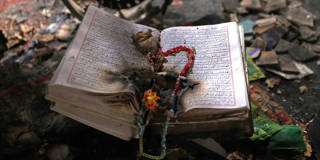
Born after the Islamic Revolution and the Iran-Iraq War, most Iranians lack their forebears’ religious fervor and ethos of sacrifice. Exposed to global culture through digital networks, they value individual autonomy and want a future defined by secularism (several mosques have been burned amid the recent unrest), freedom, and economic opportunity. They are inspired not by the Islamic Revolution’s old rallying cries, but by the calls for a democratic transition coming from imprisoned Iranian human-rights activist Narges Mohammadi, a Nobel Peace Prize laureate, and other prominent moderates, most notably Mousavi and former President Hassan Rouhani.
The different shades of moderation among opponents of the status quo highlight the central dilemma of every transition to democracy: is this about rupture, as Mousavi and Mohammadi advocate, or merely a course correction within the system, as Rouhani would prefer? It is worth remembering that transitions frequently rely on forces within the dictatorial regime. In Spain, Adolfo Suárez, secretary-general of Francisco Franco’s ruling party, led the transition to democracy. Eastern Europe, after the fall of the Berlin Wall, had plenty of Communists who changed their coats to fit into the new regime. Poland’s “roundtable talks” between the opposition Solidarity movement and the Communist regime were about power-sharing. “Your president, our Prime Minister,” wrote Adam Michnik, one of Solidarity’s leaders, in Gazeta Wyborcza, Solidarity’s official newspaper, after the June 1989 elections.
The Trump Factor
Add to all this a succession crisis, and the odds appear to be stacked against the Islamic Republic. But as frail as he is, Khamenei (like Xi) remains clear on one thing: the Soviet Union collapsed not because of popular protest, but because of divisions among the ruling elites. Moreover, the military joining the side of the resistance is the kiss of death for the regime – a lesson also learned in France in 1848 and in Iran in 1979. As long as the army, the Islamic Revolutionary Guard Corps (IRGC), and the clerics remain united – as still appears to be the case – Iran’s regime will remain intact, or so the logic goes.
But protests are not the only source of pressure on the Islamic Republic today. US President Donald Trump has positioned a massive array of military assets to strike. Though Trump initially said the goal was to protect pro-democracy protesters from the crackdown, he has since shifted his focus to a new nuclear agreement, with the show of force evidently intended to focus Iranian minds during ongoing negotiations in Geneva.
As the experiences of Afghanistan, Iraq, and Libya have shown, US military strikes are hardly a recipe for an orderly transition to democracy. They could, however, cause the regime to collapse, possibly leading to a Syria-style civil war that destabilizes the entire region as the regime’s apparatus in Tehran jealously defends its assets. A strongman within the IRGC or the army may then rise to power, probably preserving the regime’s core, even if under a different guise.
This prospect would not stop Trump. He does not care who is in charge of Iran, as long as it is someone with whom he can do business. If Trump had sent the US military to kidnap Venezuelan President Nicolás Maduro in Caracas because he wanted to restore democracy, he would not have left Maduro’s vice president, Delcy Rodríguez, in charge. What mattered to him was access to Venezuela’s massive oil reserves.
But Iran need not put itself at the mercy of Trump’s rapacious foreign policy. It can pursue a shift toward more moderate leadership that more closely embodies the revolution’s original spirit. Even in the absence of a US attack, all Iran can expect are new waves of bloody protests and inexorable economic decline. Only by embracing a more moderate posture – one that features an agreement with the West to abandon its nuclear ambitions and secures an end to the sanctions regime – can the regime lay the groundwork for a brighter future for Iranians and ensure its own survival.
Shlomo Ben-Ami, a former Israeli foreign minister, is Vice President of the Toledo International Center for Peace and the author of Prophets without Honor: The 2000 Camp David Summit and the End of the Two-State Solution (Oxford University Press, 2022).
