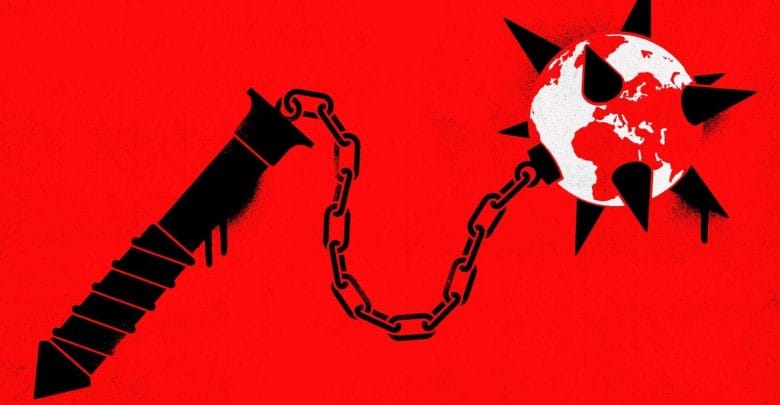
Robert Kagan: The strongmen strike back
Authoritarianism has reemerged as the greatest threat to the liberal democratic world — a profound ideological, as well as strategic, challenge. And we have no idea how to confront it.
Of all the geopolitical transformations confronting the liberal democratic world these days, the one for which we are least prepared is the ideological and strategic resurgence of authoritarianism. We are not used to thinking of authoritarianism as a distinct worldview that offers a real alternative to liberalism. Communism was an ideology — and some thought fascism was, as well — that offered a comprehensive understanding of human nature, politics, economics and governance to shape the behavior and thought of all members of a society in every aspect of their lives.
We believed that “traditional” autocratic governments were devoid of grand theories about society and, for the most part, left their people alone. Unlike communist governments, they had no universalist pretensions, no anti-liberal “ideology” to export. Though hostile to democracy at home, they did not care what happened beyond their borders. They might even evolve into democracies themselves, unlike the “totalitarian” communist states. We even got used to regarding them as “friends,” as strategic allies against the great radical challenges of the day: communism during the Cold War, Islamist extremism today.
Like so many of the theories that became conventional wisdom during the late 20th and early 21st centuries, however, this one was mistaken. Today, authoritarianism has emerged as the greatest challenge facing the liberal democratic world — a profound ideological, as well as strategic, challenge. Or, more accurately, it has reemerged, for authoritarianism has always posed the most potent and enduring challenge to liberalism, since the birth of the liberal idea itself. Authoritarianism has now returned as a geopolitical force, with strong nations such as China and Russia championing anti-liberalism as an alternative to a teetering liberal hegemony. It has returned as an ideological force, offering the age-old critique of liberalism, and just at the moment when the liberal world is suffering its greatest crisis of confidence since the 1930s. It has returned armed with new and hitherto unimaginable tools of social control and disruption that are shoring up authoritarian rule at home, spreading it abroad and reaching into the very heart of liberal societies to undermine them from within.
Dawn of the struggle

An 1876 engraving of a John Trumbull painting depicts the signing of the Declaration of Independence in 1776. The Founders based the document on the philosophy that all humans were endowed with “natural rights.” (W.L. Ormsby via the Associated Press)
We in the liberal world have yet to comprehend the magnitude and coherence of the challenge. We do not know how to manage the new technologies that put liberalism at a disadvantage in the struggle. Many of us do not care to wage the struggle at all. Some find the authoritarian critique of liberalism compelling; others value liberalism too little to care if the world order that has sustained it survives. In this new battle of ideas, we are disarmed, perhaps above all because we have forgotten what is at stake.
We don’t remember what life was like before the liberal idea. We imagine it as a pre-ideological world with “traditional autocrats” worshiping “traditional gods” who did not disturb “the habitual rhythms” of people’s everyday life, as Jeane Kirkpatrick, a former U.S. ambassador to the United Nations, once put it. This is a fantasy. Traditional society was ruled by powerful and pervasive beliefs about the cosmos, about God and gods, about natural hierarchies and divine authorities, about life and afterlife, that determined every aspect of people’s existence.
Average people had little control of their destiny. They were imprisoned by the rigid hierarchies of traditional society — maintained by brute force when necessary — that locked them into the station to which they were born. Generations of peasants were virtual slaves to generations of landowners. People were not free to think or believe as they wished, including about the most vitally important questions in a religious age — the questions of salvation or damnation of themselves and their loved ones. The shifting religious doctrines promulgated in Rome or Wittenberg or London, on such matters as the meaning of the Eucharist, were transmitted down to the smallest parishes. The humblest peasant could be burned at the stake for deviating from orthodoxy. Anyone from the lowest to the highest could be subjected to the most horrific tortures and executions on the order of the king or the pope or their functionaries. People may have been left to the “habitual rhythms” of work and leisure, but their bodies and their souls were at the mercy of their secular and spiritual rulers.
Only with the advent of Enlightenment liberalism did people begin to believe that the individual conscience, as well as the individual’s body, should be inviolate and protected from the intrusions of state and church. And from the moment the idea was born, it sparked the most intense opposition. Not only did Enlightenment liberalism challenge traditional hierarchies, but its rationalism also challenged the traditional beliefs and social mores that had united communities over the centuries. Its universalist understanding of human nature and the primacy of the individual cut against traditional ties of race and tribe — and even of family.
The new revolutionary liberalism, therefore, never existed peacefully side by side with traditional autocratic society. Traditional rulers and societies fought back with an anti-liberal worldview — an “ideology” — as potent and comprehensive as liberalism itself. Counter-Enlightenment thinkers such as Joseph de Maistre condemned the Enlightenment’s extolling of the individual’s will and desires, insisting on “individual abnegation” in a well-ordered, hierarchical, authoritarian society.
The autocracies of Russia, Austria and Prussia that crushed the French Revolution during the early 19th century tried afterward to establish an order to keep liberalism at bay. The Concert of Europe so admired today by former secretary of state Henry Kissinger and other “realists” fought and killed for divine-right absolutism, for the authority of the church, for the “natural” hierarchy of society. Metternich’s Austria and Alexander I’s Russia were the early prototypes of the modern police state. They engaged in extensive censorship, closed universities, maintained networks of spies to keep an eye on ordinary people, and jailed, tortured and killed those suspected of fomenting liberal revolution.
Nor did they limit their attacks against liberalism to their own lands. They intervened with force to crush stirrings of liberalism in Spain, Italy, Poland and the German principalities. Alexander I even contemplated extending the anti-liberal campaign across the Atlantic, to Spain’s rebellious colonies, prompting President James Monroe to proclaim his famous doctrine.
To 19th-century Americans, European authoritarianism was the great ideological and strategic challenge of the era. The American republic was born into a world dominated by great-power autocracies that viewed its birth with alarm — and with good reason. The American revolutionaries founded their new nation on what, at the time, were regarded as radical liberal principles, set forth most clearly by the 17th-century Enlightenment philosopher John Locke, that all humans were endowed with “natural rights” and that government existed to protect those rights. If it did not, the people had a right to overthrow it and, in the words of the Declaration of Independence, to form a new government “most likely to effect their Safety and Happiness.”
Natural rights knew no race, class or religion. The founders did not claim that Americans’ rights derived from English political “culture” and tradition. As Alexander Hamilton put it, the “sacred rights of mankind” were not to be found among “parchments or musty records” but were “written, as with a sunbeam . . . by the hand of the divinity itself” and thus could never be “erased or obscured by mortal power.”
We long ago lost sight of what a radical, revolutionary claim this was, how it changed the way the whole world talked about rights and governance, and how it undermined the legitimacy of all existing governments. As David Ramsay, a contemporary 18th-century American historian, put it: “In no age before, and in no other country, did man ever possess an election of the kind of government, under which he would choose to live.” Little wonder, as John Quincy Adams later observed, that the governments of Europe, the church, the “privileged orders,” the various “establishments” and “votaries of legitimacy” were “deeply hostile” to the United States and earnestly hoped that this new “dangerous nation” would soon collapse into civil war and destroy itself, which it almost did.
The battle between liberalism and traditional authoritarianism was the original ideological confrontation, and it remained the ideological confrontation for another century and a half. The principles of Enlightenment liberalism, as set forth in the Declaration of Independence, were the core issue over which the Civil War was fought. When the United States miraculously survived that war and emerged as a great power in its own right in the late 19th century, the autocratic challenge remained in the form of a Germany still ruled by Hohenzollerns, a Russia still ruled by the czars, an Austria still ruled by Habsburgs, a Turkey still ruled by Ottomans, and a Japan and China still ruled by emperors.
The nadir of authoritarianism

World War I, fought mainly in the trenches along the Western Front from 1914 to 1918, was very much a war between authoritarianism and liberalism. (John Warwick/National Library of Scotland)
Historians and political scientists long ago drained World War I of ideological import. But for those who fought it, on both sides, it was very much a war between liberalism and authoritarianism. For the British and French, and eventually the Americans, it was a fight to defend what British Prime Minister Herbert Asquith in 1914 called “the liberties of Europe,” by which he meant liberal Europe, against “militarism,” “Prussianism” and autocracy. And Germans agreed. Steeped in the Romantic, Counter-Enlightenment tradition, they regarded the Anglo-Saxons as soulless materialists.
Germans exalted the primacy of the state and the community, the Volk, the Kultur. When President Woodrow Wilson took the United States to war in 1917 in the hope of making the world “safe for democracy,” it was to defend the liberal “Atlantic Community” against this coherent, anti-liberal ideology backed by a German military machine of unprecedented strength and efficiency. The rise after the war of two even greater challenges to liberalism — in the forms of Nazi Germany and Imperial Japan — marked the failure of that hope. Their defeat in World War II gave it a new birth.
The end of that war marked the nadir of authoritarianism. All the authoritarian great powers of the 19th and early 20th centuries had been destroyed over the course of four decades — czarist Russia, along with the Habsburg, Ottoman, Chinese, Prussian, and later, German and Japanese empires. They fell not because they lost some historic battle of ideas, however. They lost actual battles. They were brought down by wars, or, in the case of Russia, by an unlikely communist revolution that could only have succeeded because of disastrous wartime experience.
Nor did communism defeat Nazism in World War II. Russian and U.S. armies defeated German armies. The subsequent division of the world between a liberal American superpower and a communist Soviet Union was also the product of war. The old Russian empire was catapulted into an unprecedented and, as it turned out, untenable position of global influence. The Cold War was not a final showdown between the only ideologies left for humanity to choose from. It was just the confrontation of the moment.


Soviet Premier Nikita Khrushchev at the United Nations in New York in October 1960. President John F. Kennedy speaking to a joint session of Congress in May 1961. (Associated Press photos)
It is not surprising that we saw communism as the greatest challenge democracy could face. It had the power of the Soviet Union behind it, while the authoritarians were weak pawns on the chessboard of the Cold War. The goals and methods of the Bolsheviks, the terror and oppression they employed to raze an entire economic and social order, seemed not only uniquely pernicious but also irreversible. That was the key point of Kirkpatrick’s 1979 essay, “Dictatorships and Double Standards,” in which she laid out her famous doctrine of supporting “traditional autocracies” in the struggle against “totalitarian” communism. While the former could, over time, possibly make the transition to democracy, she argued, there was “no instance of a revolutionary ‘socialist’ or Communist society” making a transition to democracy.
The thesis turned out to be wrong, however: Communism was neither unreformable nor irreversible. The fanatical utopianism of the Marxist-Leninist project proved too much at odds with fundamental elements of human nature, including the desire to amass wealth and property as the fruits of one’s labor. It could not easily survive in a competitive world. Though, in different circumstances, it might have lasted much longer, any transformation that required so much violence and state repression was fighting an uphill battle.
Communism’s other problem was, ironically, that its leaders chose to compete on the same plane as liberalism: They measured success in material terms. Soviet leaders promised to meet and surpass the West in improving the standard of living of the average citizen. They failed, and suffered a crisis of confidence about their ideology. When Mikhail Gorbachev tried to reform the system by introducing elements of political and economic liberalism, he inadvertently brought about its demise. China adopted a state capitalist system without the political reform. Both proved that communism was neither invincible nor inadaptable.
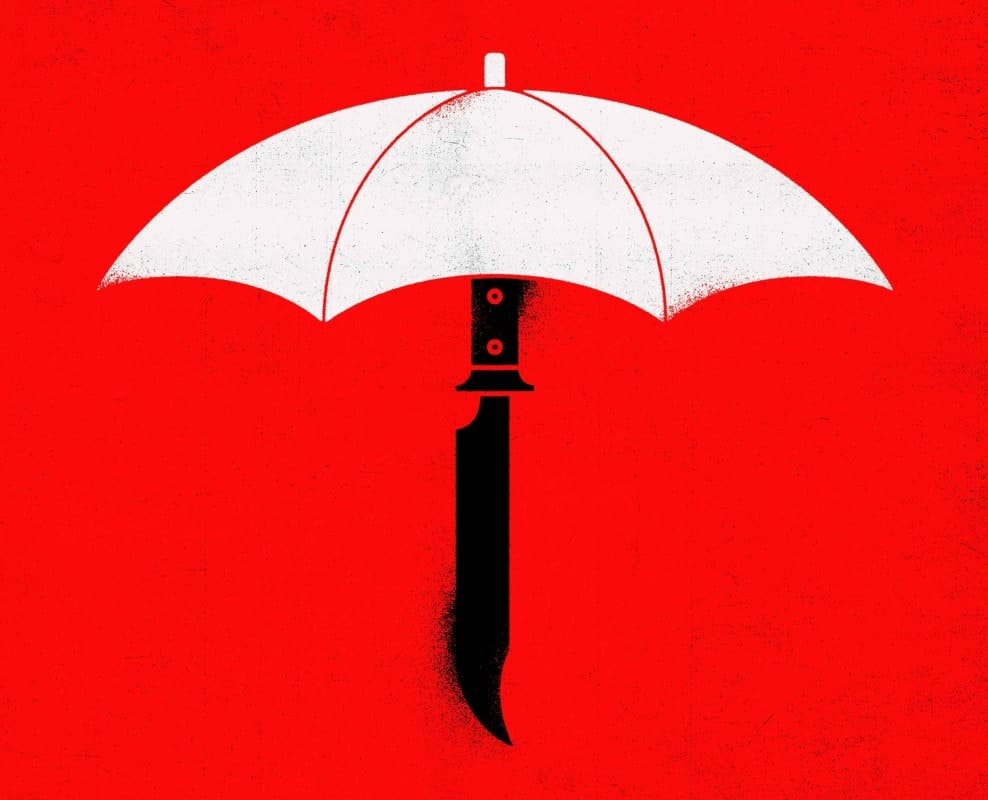
Humans do not yearn only for freedom. They also seek security — not only physical security against attack, but the security that comes from family, tribe, race and culture. Liberalism has no particular answer to these needs.
The liberal democracies had overestimated the challenge of communism, and they underestimated the challenge of traditional authoritarianism. And this, too, was understandable. Throughout the years of the Cold War and during the era of liberal dominance that followed, the world’s autocracies were too weak to challenge liberalism as they had before. They struggled just to survive. The right-wing dictatorships that depended on the United States for money and protection had to at least pay lip service to liberal principles and norms, lest they lose that support. Some held elections when pressed, provided space to “moderate” political opponents and allowed liberal international nongovernmental organizations to operate within their borders, monitoring their human rights records, working with civil society and training political parties — all as a way of avoiding potentially fatal economic and political ostracism.
As the scholars Yong Deng and Fei-Ling Wang have noted, even Chinese leaders after the Tiananmen Square repression in 1989 lived in “constant fear of being singled out and targeted” by the “international hierarchy dominated by the United States and its democratic allies.” The Chinese toughed it out, but many autocrats in those decades did not make it. The Philippines’ Ferdinand Marcos, Chile’s Augusto Pinochet, Haiti’s Jean-Claude Duvalier, Paraguay’s Alfredo Stroessner, and the South Korean military junta were all forced out by a Reagan administration that had quickly abandoned the Kirkpatrick doctrine. Over the next decade and a half, others followed. In 2003, 2004 and 2005, the post-communist autocrats in Kyrgyzstan, Georgia and Ukraine all gave way to liberal forces that had received training and support from liberal nongovernmental organizations, which the dictators had permitted to avoid alienating the liberal world.
The authoritarians’ weakness reinforced the belief among liberal democracies that ideological competition had ended with the fall of communism. In the brief era of liberal hegemony that followed the end of the Cold War, we did not worry, because we did not notice, as authoritarianism gradually regained its power and its voice as liberalism’s most enduring and formidable challenge.
In Russia, for instance, we believed that communism had been defeated by liberalism, and in a sense it was, but the winner in post-communist Russia was not liberalism. The liberal experiment of the Boris Yeltsin years proved too flawed and fragile, giving way almost immediately to two types of anti-liberal forces: one, the remnants of the Soviet (and czarist) police state, which the former KGB operative Vladimir Putin reestablished and controlled; the other, a Russian nationalism and traditionalism that the Bolsheviks had tried to crush but was resurrected by Putin to provide a veneer of legitimacy to his autocratic rule.
As Putin dismantled the weak liberal institutions of the 1990s, he restored the czarist-era role of the Orthodox Church, promised strong leadership of a traditional Russian kind, fought for “traditional” values against LGBTQ rights and other gender-related issues, and exalted Russia’s special “Asiatic” character over its Western orientation. So far, this has proved a durable formula — Putin has already ruled longer than many of the czars, and while a sharp economic downturn could shake his hold on power, as it would any regime’s, he has been in power so long that many Russians can imagine no other leader.
The few autocracies that survived the era of liberal hegemony did so by refusing to make concessions to liberal norms. Either they had the strength and independence to weather liberal disapproval or they had something the United States and its democratic allies needed — or thought they needed. The Chinese had both, which allowed them simply to crush all liberal tendencies both inside and outside the ruling oligarchy, and to make sure they stayed crushed — even as China’s leadership made the tricky transition from Maoist communism to authoritarian state capitalism. Most Arab dictatorships also survived, either because they had oil or because, after the terrorist attacks of Sept. 11, 2001, the United States returned to supporting allegedly “friendly” autocrats against radical alternatives.
The examples of autocracies such as Russia and China successfully resisting liberal pressures gave hope to others that the liberal storm could be weathered. By the end of the 2000s, the era of autocrats truckling to the liberal powers had come to an end. An authoritarian “backlash” spread globally, from Egypt to Turkey to Venezuela to Zimbabwe, as the remaining authoritarian regimes, following Putin’s example, began systematically restricting the space of civil society, cutting it off from its foreign supporters, and curbing free expression and independent media.
The pushback extended to international politics and institutions, as well. For too long, as one Chinese official complained in 2008 at the World Economic Forum in Davos, Switzerland, the liberal powers had determined the evolution of international norms, increasingly legitimizing intrusions into the domestic affairs of authoritarian powers: “You Western countries, you decide the rules, you give the grades, you say, ‘You have been a bad boy.’ ” But that was over. The authoritarian governments of Russia, China, Saudi Arabia, Venezuela and Iran all worked to weaken liberalism’s hold. Their different ideological orientations, which Americans regard as all-important, did not make them lose sight of their common interest as non-liberal states. The result, as Russian Foreign Minister Sergei Lavrov put it in 2007, was that, for the first time in many years, there was real competition in “the market of ideas” between different “value systems.” The West had lost “its monopoly on the globalization process.”
The authoritarians now have regained their confidence and found their voice in a way they have not since 1942 and, just as was true in the decades before World War II, the most powerful anti-liberal regimes “are no longer content simply to contain democracy,” as the editors of the Journal of Democracy observed in 2016. The regimes now want to “roll it back by reversing advances dating from the time of the democratic surge.”
These authoritarians are succeeding, but not only because their states are more powerful today than they have been in more than seven decades. Their anti-liberal critique is also powerful. It is not just an excuse for strongman rule, though it is that, too. It is a full-blown indictment of what many regard as the failings of liberal society, and it has broad appeal.
 The Berlin Wall, which separated Soviet-controlled East Germany from West Berlin, had stood for 28 years before it was opened in 1989. (Carol Guzy/The Washington Post)
It has been decades since liberal democracies took this challenge seriously. The end of the Cold War seemed like indisputable proof of the correctness of the Enlightenment view — the belief in inexorable progress, both moral and scientific, toward the achievement of the physical, spiritual and intellectual freedom of every individual. History was “the progress of the consciousness of freedom,” as Georg Wilhelm Friedrich Hegel put it in 1830; or as Francis Fukuyama wrote in “The End of History and the Last Man” in 1992, there were fundamental processes at work dictating “a common evolutionary pattern for all human societies — in short, something like a Universal History of mankind in the direction of liberal democracy.”
The premise underlying these convictions was that all humans, at all times, sought, above all, the recognition of their intrinsic worth as individuals and protection against all the traditional threats to their freedom, their lives and their dignity that came from state, church or community.
This idea has generally been most popular in relatively good times. It flourished during the late 19th and early 20th century before being dashed by World War I, the rise of communism and fascism, and the decline of democracy during the 1920s and 1930s. It flourished again after the end of the Cold War. But it has always been an incomplete description of human nature. Humans do not yearn only for freedom. They also seek security — not only physical security against attack but also the security that comes from family, tribe, race and culture. Often, people welcome a strong, charismatic leader who can provide that kind of protection.
Liberalism has no particular answer to these needs. Though liberal nations have at times produced strong, charismatic leaders, liberalism’s main purpose was never to provide the kind of security that people find in tribe or family. It has been concerned with the security of the individual and with treating all individuals equally regardless of where they come from, what gods they worship, or who their parents are. And, to some extent, this has come at the expense of the traditional bonds that family, ethnicity and religion provide.
To exalt the rights of the individual is to weaken the authority of the church and other authorities that presume to tell individuals what they must believe and how they must behave. It weakens the traditional hierarchies of birth and class, and even those of family and gender. Liberalism, therefore, cannot help but threaten “traditional values” and cultures. Those are maintained either by the power of traditional authorities or by the pressures of the community and majority opinion. But in a liberal state, the rights of the few, once recognized, supersede the preferences of the many.
In Europe and the United States, this has meant the breakdown of white, Christian cultural ascendancy as liberalism has progressively recognized the rights of people of color; of Jews and Muslims; of gays and others with sexual orientations frowned upon, if not forbidden, by the major religions; and, more recently, of refugees and migrants. Liberalism is a trade-off, and many have often been unhappy at what was lost and unappreciative of what was gained.
Liberalism at war with itself
 President Recep Tayyip Erdogan of Turkey, in Ankara in June 2017. Erdogan used a 2016 coup attempt to crack down on dissent and to consolidate presidential power. (Associated Press)
Liberalism has thus always been vulnerable to anti-liberal backlashes, especially in times of upheaval and uncertainty. It faced such a backlash in the years between the two world wars and during the global economic depression. In 1940, liberal democracy looked to be on its last legs; fascism seemed “the wave of the future,” as Anne Morrow Lindbergh wrote at the time.
Liberalism faces a backlash again in the present era of geopolitical, economic and technological upheaval. In such times, many people focus on liberalism’s shortcomings, the things it does not provide and the things it either weakens or destroys. The thing liberalism does provide — security of the individual’s rights against the state and the community — is easily taken for granted or devalued. Even in the United States, the one nation founded on the principle of universal rights, the public has supported the restriction of rights in times of perceived emergency, whether justified or not. In other nations where experience with liberal democracy has been brief and shallow, and where nationalism is tied to blood and soil, it seems almost inevitable that political forces would emerge promising to defend tradition and culture and community against the “tyranny” of liberal individualism.
That is the backlash mounting across the globe, and not only among the increasingly powerful authoritarian governments of Russia and China, but also within the liberal democratic world itself.
Hungary’s Viktor Orban has been in the vanguard, proudly proclaiming his “illiberalism” in standing up for his country’s white, Christian culture against the nonwhite, non-Christian migrants and their “cosmopolitan” liberal protectors in Brussels, Berlin and other Western European capitals. Recep Tayyip Erdogan has dismantled Turkey’s liberal institutions in the name of Islamic beliefs and traditions.
Within the democratic world, there are alliances forming across borders to confront liberalism. In his 2018 book, “The Virtue of Nationalism,” influential Israeli intellectual Yoram Hazony urged unified resistance by all the “holdouts against universal liberalism,” the Brexiteers, the followers of Marine Le Pen in France and Geert Wilders in the Netherlands, the Hindu nationalists of India, as well as the increasingly nationalist and illiberal governments of Poland and Hungary — all those who, like Israel, “wish obstinately to defend their own unique cause and perspective” against the “proponents of liberal empire,” by which he means the U.S.-led liberal-democratic order of the past 70-plus years.
And, of course, the United States has been experiencing its own anti-liberal backlash. Indeed, these days the anti-liberal critique is so pervasive, at both ends of the political spectrum and in the most energetic segments of both political parties, that there is scarcely an old-style American liberal to be found. But regarding the authoritarian resurgence that is altering the world today, the most significant developments are occurring among the United States’ conservatives. Just as the American left once admired international communism as an opponent of the capitalist system it deplored, a growing number of American conservatives, including those in charge of U.S. foreign policy, find themselves in sympathy with the resurgent authoritarians and proponents of illiberalism.


The anti-liberal critique has always resonated with at least some strains of American conservative thought. There has always been a tension in American conservatism. As Post columnist George F. Will once observed, the “severely individualistic values” and “atomizing social dynamism” of liberal capitalism invariably conflict with the traditions of community, church and other institutions that conservatives have always valued. At times, some conservatives have questioned the “whole concept of universal natural rights” and have sought to ground American democracy in a particular cultural and political tradition. Instead of defending the principles of the Declaration of Independence, they have defended tradition against the destructive power of those principles. This was a different idea of American nationalism, and it was inevitably bound up with questions of religion, race and ethnicity, for it was about preserving the ascendancy of a particular cultural and political tradition which happened to be white, Anglo-Saxon and Protestant.
From the early 19th century onward, a consistent theme in American history has been the fear that an Anglo-Saxon Protestant United States was being threatened both from within and from without — from within by the calls for the liberation and enfranchisement of African Americans, and from without by the influx of non-Anglo-Saxon, non-Protestant immigrants from Ireland, from Japan and China, from southern, eastern and central Europe, and later from Latin America and the Middle East.
This remains a theme of modern conservatism. During the 1950s and 1960s, Russell Kirk looked to the segregationist South as the essential pillar on which the American republic rested, and believed that in these “times of trouble” the South had “something to teach the modern world.” William F. Buckley Jr. criticized such “convulsive measures” as the 1954 Supreme Court decision in Brown v. Board of Education because they did “violence to the traditions of our system.” When a mob of white students attacked a young black woman who had been admitted to the University of Alabama following a court order in 1956, Buckley criticized the courts for declaring illegal “a whole set of deeply-rooted folkways and mores” and argued that the “white community” was “entitled to take such measures” as were necessary “to prevail, politically and culturally.” Nor, he wrote, could the nation get away with “feigning surprise” at the violent reaction.
Authoritarians’ sympathetic friends: American conservatives
 President Vladimir Putin has ruled Russia since 1999. One observer says the former KGB operative has positioned himself as the leader of the world’s “socially and culturally conservative” common folk against “international liberal democracy.” (Alexey Nikolsky/AFP/Getty Images)
In the decades since, it has sometimes been difficult to distinguish between conservative efforts to protect political and cultural traditions against the assaults of progressive liberalism on the one hand, and the protection of white Christian ascendancy against the demands of racial and ethnic and other minorities on the other. Today, many in the United States — mostly, but certainly not exclusively, white Christians — are once again defending themselves and their “deeply-rooted folkways and mores” against decisions by U.S. courts granting rights and preferences to minorities, to women, to the LGBTQ community, to Muslims and other non-Christians, and to immigrants and refugees. And perhaps again we should not “feign surprise” that they are mounting a challenge to the liberalism in whose name this assault on traditional customs and beliefs has been launched. The backlash certainly played a part in the election of Donald Trump and continues to roil the United States today.
Nor should we be surprised that there has been a foreign-policy dimension to this backlash. Debates about U.S. foreign policy are also debates about American identity. The 1920s combined rising white nationalism, restrictive immigration policies and rising tariffs with a foreign policy that repudiated “internationalism” as anti-American. The “America First” movement in 1940 not only argued for keeping the United States out of the war in Europe, but also took a sympathetic view of German arguments for white supremacy.
Those views were suppressed during a war fought explicitly against Nazism and its racial theories, and then during a Cold War waged against communism. But when the Cold War ended, the old concerns about the nation’s social and cultural identity reemerged. The political scientist Samuel P. Huntington, who once made the case for authoritarianism as a necessary stage in “modernization,” in his more advanced years worried that the United States’ Anglo-Saxon Protestant “identity” was being swamped by liberalism in the form of “multiculturalism.” He both predicted and cautiously endorsed a new “white nativism,” and it was largely on these grounds that in his post-Cold War writings about a “clash of civilizations,” he urged Americans to pull back from the world and tend to their own “Western” civilization.
There has always been an element of anti-Americanism in that strand of conservatism, in the sense that it has stood in opposition to the liberal Enlightenment essence of the American founding. Abraham Lincoln wrote of this essence when he described the universal principles of the Declaration of Independence as an “apple of gold” and the Union and the Constitution as the “picture of silver,” the frame erected around it. At a time when many in both the South and the North were calling for a conservative defense of a Constitution that enshrined slavery and white supremacy, Lincoln insisted that neither the Constitution, nor even the Union, were the ultimate guarantors of Americans’ freedoms. It was the universal principles of the Declaration that lay at the heart of free government — the “picture was made for the apple, not the apple for the picture.”
The Civil War vindicated that view on the field of battle, and ever since, the story of the United States has been the continual expansion of rights to more and more groups claiming them, as well as continual resistance to that expansion. When conservatives object to this historical reality, they may or may not be right in their objections, but it is to America that they are objecting.
 Prime Minister Viktor Orban of Hungary in April 2018. Orban has systematically weakened Hungary’s free press, its independent judiciary, and its open and competitive political system. (Laszlo Balogh/Getty Images)
These days, some American conservatives find themselves in sympathy with the world’s staunchest anti-American leaders, precisely because those leaders have raised the challenge to American liberalism. In 2013, Putin warned that the “Euro-Atlantic countries” were “rejecting their roots,” which included the “Christian values” that were the “basis of Western civilization.” They were “denying moral principles and all traditional identities: national, cultural, religious, and even sexual.” Conservative commentator Patrick Buchanan responded by calling Putin the voice of “conservatives, traditionalists and nationalists of all continents and countries” who were standing up against “the cultural and ideological imperialism of . . . a decadent West.”
The conservative thinker and writer Christopher Caldwell recently observed that the Russian leader is a “hero to populist conservatives around the world” because he refuses to submit to the U.S.-dominated liberal world order. If the polls are to be believed, the number of favorable views of Putin has grown among Trump supporters. They are not simply following their leader. As the political scientist M. Steven Fish observes, Putin has positioned himself as the leader of the world’s “socially and culturally conservative” common folk against “international liberal democracy.” Orban in Hungary, the self-proclaimed leader of “illiberalism” within the democratic world, is another hero to some conservatives. Caldwell suggests that the avowedly anti-liberal Christian democracy that Orban is trying to create in Hungary is the sort of democracy that “prevailed in the United States 60 years ago,” presumably before the courts began imposing liberal values and expanding the rights of minority groups.
Political theorist Marc Plattner argues that the gravest threat to liberal democracy today is that the “mainstream center-right parties” of the liberal democratic world are being “captured by tendencies that are indifferent or even hostile to liberal democracy.” He does not mention the United States, but the phenomenon he describes is clearly present among American conservatives, and not just among the “alt-right.”
Liberalism under attack at home, from both the left and the right
 Presidential candidate Donald Trump at a campaign rally in Reno, Nev., in January 2016. As president, Trump’s nationalist views have shaped his foreign policy, leading the United States to tilt toward anti-liberal forces in Europe and elsewhere. (Charles Ommanney/The Washington Post)
If such views were confined to a few intellectuals on the fringe of that broad and variegated phenomenon we call American conservatism, it would matter less. But such thinking can be found at the highest reaches of the Trump administration, and it is shaping U.S. foreign policy today. Last fall, President Trump declared to a rally of supporters, “You know what I am? I’m a nationalist, okay? I’m a nationalist. Nationalist. Use that word. Use that word.”
In Brussels in December, Secretary of State Mike Pompeo also made a case for nationalism, insisting that “nothing can replace the nation-state as the guarantor of democratic freedoms and national interests.” The idea echoes Hazony’s book “The Virtue of Nationalism,” which argues that true democracy comes from nationalism, not liberalism. It was a nod to the nationalists of Europe waging their crusade against the “liberal imperialism” of the European Union. And, indeed, the Trump administration has been openly putting its thumb on the scale in this battle, seeking, as Richard Grenell, the U.S. ambassador to Germany, put it, to “empower” the conservative forces in Europe and Britain while denigrating German Chancellor Angela Merkel and the mainstream liberal parties on both the center-right and center-left.
Putin has also been aiding the illiberal nationalist movements in Europe as a central part of his global political strategy. Many of the movements have received funding from Russian sources, while the mainstream parties — or even those liberals not associated with a mainstream party, such as French President Emmanuel Macron — have been the target of Russian disinformation campaigns on social media. During the Cold War, when the Soviet Union also engaged in large, if now quaintly archaic, disinformation efforts, the U.S. government poured significant resources into combating them. Today, though we have mounted the beginnings of a defense against foreign manipulation, we have made little effort to respond to anti-liberal propaganda with our own defense of liberalism.
That is not so surprising when liberalism itself is under attack at home, from both the left and the right. Today, progressives continue to regard liberal capitalism as deeply and perhaps irrevocably flawed and call for socialism, just as they did during the Cold War. They decry the “liberal world order,” the international trade and financial regime, and virtually all the liberal institutions established during World War II and at the dawn of the Cold War.
And, just as they opposed responding to the Soviet communist challenge — whether through arms buildups, the strategy of containment or by waging an ideological conflict on behalf of liberal democracy — modern progressives show little interest in taking on the challenge posed by the authoritarian great powers and the world’s other anti-liberal forces if doing so would entail the exercise of U.S. power and influence. The progressive left is more concerned about alleged U.S. “imperialism” than about resisting authoritarianism in places such as Venezuela.
During the Cold War, the American left was outnumbered by the broad coalition of conservatives and anti-communist liberals who, in their own ways and for their own reasons, joined together to support anti-communist containment and to make the case for the superiority of liberal democratic capitalism over Soviet communism.
No such coalition has coalesced to oppose international authoritarianism or to make the case for liberalism today. A broad alliance of strange bedfellows stretching from the far right to self-described “realists” to the progressive left wants the United States to abandon resistance to rising authoritarian power. They would grant Russia and China the spheres of influence they demand in Europe, Asia and elsewhere. They would acquiesce in the world’s new ideological “diversity.” And they would consign the democracies living in the shadow of the authoritarian great powers to their hegemonic control.
As the Trump administration tilts toward anti-liberal forces in Europe and elsewhere, most Americansappear indifferent, at best. In contrast to their near-obsession with communism during the Cold War, they appear unconcerned by the challenge of authoritarianism. And so, as the threat mounts, America is disarmed.
Much of the problem is simply intellectual. We look at the world today and see a multisided struggle among various systems of governance, all of which have their pluses and minuses, with some more suited to certain political cultures than others. We have become lost in endless categorizations, viewing each type of non-liberal government as unique and unrelated to the others — the illiberal democracy, the “liberal” or “liberalizing” autocracy, the “competitive” and “hybrid” authoritarianism. These different categories certainly describe the myriad ways non-liberal societies may be governed. But in the most fundamental way, all of this is beside the point.
By far, the most significant distinction today is a binary one: Nations are either liberal, meaning that there are permanent institutions and unchanging norms that protect the “unalienable” rights of individuals against all who would infringe on those rights, whether the state or the majority; or they are not liberal, in which case there is nothing built into the system and respected by the government and the governed alike that prevents the state or the majority from violating or taking away individuals’ rights whenever they choose, in ways both minor and severe.
The distinction may not have been as straightforward during the 18th and 19th centuries, when Britain and France had liberal institutions that genuinely challenged and even curtailed the power of absolute monarchies. But in today’s world, there can be no liberalism without democracy and no democracy without liberalism. Hungary’s Orban may speak of “illiberal” democracy, but he has systematically weakened the institutions — a free press, an independent judiciary, an open and competitive political system — on which democracy depends.
The new tools of oppression in the ‘illiberal state’


We are too easily fooled by the half-measures of autocrats and would-be autocrats. A ruler or a dominant majority may leave individuals alone for periods of time, or they may limit their rights only in small ways, or only on particular issues. But if they are not bound to protect individuals in their rights to life, liberty and property — and in this vital respect, to treat all people as equals under the law — then the rights they permit are merely conditional. Rulers may find it prudent, convenient or lucrative to allow people the free exercise of some or most of their rights, but the moment circumstances change, the rulers can do whatever they want.
The distinction is important because circumstances are changing. For the past seven-plus decades since the end of World War II and the beginning of the U.S.-led liberal world order, authoritarian regimes faced many disincentives to deprive their people of individual rights. In a world dominated by liberal powers — and above all, by the United States — they had reason to fear political and military punishments that could prove their undoing, and in many cases did. Regimes that went too far often paid a price eventually, and particularly if they were aligned with and dependent on the dominant liberal powers.
To take one example, South Korea’s Park Chung-hee had thousands of people brutally tortured and many killed during the 1960s and 1970s — not just suspected communists and democracy activists, but also those simply overheard criticizing the government. That worked for a while to keep the regime in power, but after Park was assassinated in 1979 and the United States began pressing for reform, his successors decided to rule with a somewhat lighter hand. Ultimately, they relinquished power peacefully, after being effectively ordered to do so by Washington. This gave rise to the idea that South Korea under Park had been a “liberalizing” autocracy, when, in fact, it was an autocracy that succumbed to external pressures, which limited its ability to fend off domestic opposition.
Many dictatorships simply lacked the means to oppress masses of people in ways that were both effective and affordable. If the only way to control a population was to kill and torture everyone, that was not a promising business model, even if a government did have the resources to sustain such a practice, which most did not — a lesson learned by the Chinese underMao Zedong. Better to try to control what people said and thought, as well as frightening them with the consequences of incorrect thinking.
But, for a variety of reasons, some were better at this “totalitarian” form of control than others. The more-modern societies such as East Germany’s oppressed their people with scientific efficiency, but many other authoritarian governments had neither the skill nor the resources to control their populations as effectively. In the United States, we deluded ourselves into believing that if authoritarian regimes were not engaged in systematic brutal repression, it was because they were “liberalizing”; they were often just incapable and were responding to the disincentives in a world dominated by liberal powers.
But the structure of incentives and disincentives is now changing, because the structure of power in the international system is changing. When Orban celebratedthe “illiberal state” a few years ago, he claimed that he was only responding to the “great redistribution of global financial, economic, commercial, political and military power that became obvious in 2008.”
Since the late 2000s, autocrats including Putin in Russia, Xi Jinping in China and Abdel Fatah al-Sissiin Egypt have given up the pretense of competitive elections or even collective leadership. Rigged elections are no longer necessary to appease liberal powers that lack either the will or the ability to complain. It has become common practice for autocrats to make themselves “president for life,” as Xi did a year ago and as Sissihas begun to do in recent weeks. This throwing off the mask, including by Sissi, a leader heavily dependent on and allegedly friendly to the United States, shows how few of the old disincentives remain, at least at the moment.
The incentive structure has changed within the liberal democratic world, as well. Twenty years ago, when European and transatlantic liberalism was stronger, Orban’s illiberalism would not have been tolerated to the degree it is today. His success is evidence of the retreat of liberalism globally.
A fateful choice
 Facial recognition software records the faces of people in China in November 2017. Revolutions in communications technologies, data collection and artificial intelligence have reshaped the competition between liberalism and anti-liberalism. (Gilles Sabri for The Washington Post)
The problem is not just the shifting global balance of power between liberalism and anti-liberalism. The revolutions in communications technologies, the Internet and social media, data collection and artificial intelligence have reshaped the competition between liberalism and anti-liberalism in ways that have only recently become clear, and which do not bode well for liberalism.
Developments in China offer the clearest glimpse of the future. Through the domination of cyberspace, the control of social media, the collection and use of Big Data and artificial intelligence, the government in Beijing has created a more sophisticated, all-encompassing and efficient means of control over its people than Joseph Stalin, Adolf Hitler or even George Orwell could have imagined. What can be done through social media and through the employment of artificial intelligence transcends even the effective propaganda methods of the Nazis and the Soviet communists. At least with old-fashioned propaganda, you knew where the message was coming from and who was delivering it. Today, people’s minds are shaped by political forces harnessing information technologies and algorithms of which they are not aware and delivering messages through their Facebook pages, their Twitter accounts and their Google searches.
The Chinese government is rapidly acquiring the ability to know everything about the country’s massive population, collectively and individually — where they travel, whom they know, what they are saying and to whom they are saying it. A “social-credit register” will enable the government to reward and punish individuals in subtle, but pervasive, ways. The genius of what democracy scholar Larry Diamond has calledthis “postmodern totalitarianism” is that individuals will “appear to be free to go about their daily lives” but, in fact, the state will control and censor everything they see, while keeping track of everything they say and do.
This revolutionary development erases whatever distinction may have existed between “authoritarianism” and “totalitarianism.” What autocrat would not want to acquire this method of control? Instead of relying on expensive armies and police engaged in open killing and brutality against an angry and resentful population, an autocrat will now have a cheaper, more subtle and more effective means of control. Recognizing this demand, China is marketingthe hardware and software of its surveillance state system to current and would-be autocrats on almost every continent.
Consequently, the binary distinction between liberal and non-liberal governments is going to be all that matters. Whether a government is liberal or non-liberal will determine how it deals with new technologies, and there will be radical differences. Liberal governments will have to struggle with the implications of these technologies for individual rights — and as we have already seen, it isn’t easy. But liberal democracies will approach the problem from the bedrock premise that individual rights must be protected. The rights of private companies to sell what they want will have to be balanced against the rights of individuals to protect their own data. The need of government to provide security by monitoring the communications of dangerous people will have to be balanced against the right of individuals not to be spied on by their government.
The problems that bedevil liberal democracies, however, are not problems at all for non-liberal governments. Whether “authoritarian,” “totalitarian,” “liberal” autocracy or “illiberal” democracy, they do not face the same dilemmas: All these governments, by definition, do not have to respect the rights of individuals or corporations. Individuals are not entitled to privacy, and there are no truly private companies. As Diamond observed, there is “no enforceable wall of separation between ‘private’ companies and the party-state” in China. But the same is true in Russia, where the majority of companies are owned by Putin and asmall loyal oligarchy; in Egypt, where they are owned by the military; in Venezuela, where they are owned by a business and military mafia; and in Turkey, where state capture of the economy has risen dramatically in recent years.
Even in more open and still nominally democratic countries such as Italy, India and Poland, not to mention Hungary, there is nothing to stop leaders from gaining control of the main purveyors of social media. As the political scientist Ronald J. Deiberthas noted, the use of social media to control, confuse, mislead and divide a public is just as effective in the hands of anyone seeking power in a democracy as it is for established authoritarians. Today, every autocracy in the world demands that foreign companies locate their data-storage devices on its national territory, where the government can hack into it and control what goes out or in. But autocracies aren’t the only ones making that demand.

What we used to regard as the inevitable progress toward democracy, driven by economics and science, is being turned on its head. In non-liberal societies, economics and science are leading toward the perfection of dictatorship.
If it was always a bit of myth that traditional authoritarian governments left individuals’ private lives undisturbed, now we are entering a world where privacy itself may become a myth. In such a world, all non-liberal governments will tend toward becoming “postmodern totalitarians.” What we used to regard as the inevitable progress toward democracy, driven by economics and science, is being turned on its head. In non-liberal societies, economics and science are leading toward the perfection of dictatorship.
If nothing else, that should make the United States reconsider the idea of supporting “friendly” dictatorships. It was always a dubious proposition. As Elliott Abrams and others have recorded, the Reagan administration, which came into office convinced by Kirkpatrick’s argumentsfor supporting “friendly” right-wing autocracies, soon determined that this was a mistake. It turned out that the “friendly” dictatorships were not actually friends at all. They were radicalizing their societies deliberately. They were more intent on crushing moderates and liberals than on eliminating radicals and revolutionaries, and not least because they knew that the threat of radical revolution kept the money and the weapons flowing from Washington. The Reagan administration discovered that, in the Philippines, South Korea, Chile, Paraguay and Haiti, the “friendly” dictators were obstacles to democracy, not to communism.
Egypt’s Hosni Mubarak played the game successfully for decades: He suppressed the moderate opposition while allowing space for the Muslim Brotherhood, knowing that the threat of a Brotherhood victory would keep the Americans on his side. It worked until he lost control of society — resulting in the Brotherhoodvictory at the ballot box in 2012 that his policies had helped make inevitable. That we have unlearned this very recent lesson and are once again looking to strongmen such as Crown Prince Mohammed bin Salman of Saudi Arabia and Egypt’s Sissi as allies is a testament to how difficult it is for convenient myths to die.
Today, we have even more powerful reasons not to support dictatorships, even those we deem “friendly.” The world is now being divided into two sectors: one in which social media and data are controlled by governments and citizens live in surveillance states; and one in which individuals still have some protection against government abuse. And the trend is clear — the surveillance-state sector is expanding and the protected space is shrinking. The world’s autocracies, even the “friendly” ones, areacquiringthe new methods and technologies pioneered by Russia and China. And, as they do, they become part of the global surveillance-state network. They are also enhancing the power and reach of China and Russia, who by providing the technology and expertise to operate the mechanisms of social control are gaining access to this ever-expanding pool of data on everyone on the planet.
We have already seen how authoritarian manipulation of social media transcends borders. Russia’s Internet Research Agency, its bot farms, state-sponsored trolls and sophisticated hacking have made Americans’ data and information space vulnerable — along with the minds into which that information is fed. A country such as Egypt may or may not be an ally in the struggle against radical Islam, but in the struggle between liberalism and autocratic anti-liberalism, Sissi’s Egypt will be on the other side.
Much more is at risk than our privacy. We have been living with the comforting myth that the great progress we have witnessed in human behavior since the mid-20th century, the reductions in violence, in the brutality of the state, in torture, in mass killing, cannot be reversed. There can be no more holocausts; no more genocides; no more Stalinist gulags. We insist on believing there is a new floor below which people and governments cannot sink. But this is just another illusion born in the era that is now passing.
The enormous progress of the past seven-plus decades was not some natural evolution of humanity; it was the product of liberalism’s unprecedented power and influence in the international system. Until the second half of the 20th century, humanity was moving in the other direction. We err in thinking that the horrors perpetrated against Ukrainians and Chinese during the 1930s, and against Jews during the 1940s, were bizarre aberrations. Had World War II produced a different set of victors, as it might have, such behavior would have persisted as a regular feature of existence. It certainly has persisted outside the liberal world in the postwar era — in Cambodia and Rwanda, in Sudan and the Balkans, in Syria and Myanmar.
Even liberal nations are capable of atrocities, though they recoil at them when discovered. Non-liberal nations do not recoil. Today, we need only look to the concentration camps in China where more than 1 million Muslim Uighurs are being subjected to mental and physical torture and “re-education.” As authoritarian nations and the authoritarian idea gain strength, there will be fewer and fewer barriers to what illiberal governments can do to their people.
We need to start imagining what it will be like to live in such a world, even if the United States does not fall prey to these forces itself. Just as during the 1930s, when realists such as Robert Taft assured Americans that their lives would be undisturbed by the collapse of democracy in Europe and the triumph of authoritarianism in Asia, so we have realists today insisting that we pull back from confronting the great authoritarian powers rising in Eurasia. President Franklin D. Roosevelt’s answer, that a world in which the United States was the “lone island” of democratic liberalism would be a “shabby and dangerous place to live in,” went largely unheeded then and no doubt will go largely unheeded again today.
To many these days, liberalism is just some hazy amalgam of idealisms, to be saluted or scorned depending on whose ox is being gored. Those who have enjoyed the privileges of race and gender, who have been part of a comfortable majority in shaping cultural and religious norms, are turning away from liberalism as those privileges have become threatened — just as critics of liberal capitalism on the American left once turned away from liberalism in the name of equality and justice and may be doing so again. They do so, however, with an unspoken faith that liberalism will continue to survive, that their right to critique liberalism will be protected by the very liberalism they are critiquing.
Today, that confidence is misplaced, and one wonders whether Americans would have the same attitude if they knew what it meant for them. We seem to have lost sight of a simple and very practical reality: that whatever we may think about the persistent problems of our lives, about the appropriate balance between rights and traditions, between prosperity and equality, between faith and reason, only liberalism ensures our right to hold and express those thoughts and to battle over them in the public arena. Liberalism is all that keeps us, and has ever kept us, from being burned at the stake for what we believe.
[Have a question about this essay? Submit it to Robert Kagan.]
