
Governments already have one practical tool for doing this. At COP30 in Belém last year, Brazil championed the Belém Declaration on Sustainable Public Procurement, which set a common direction for national and subnational governments to use their purchasing power in the service of the green transition. A year on, Brazil’s minister of management and innovation in public services, Esther Dweck, and I have just published a new policy brief, From Commitment to Implementation: Making the Belém Declaration a Driver of Inclusive and Sustainable Growth, which explains how the declaration can be turned from a set of commitments into results, and what COP31 can do to help.
Globally, greenhouse-gas emissions are still rising, after reaching a new high in 2025, and climate-related disasters are growing more frequent and severe. Earlier this year, the UN Environment Programme warned that, even if governments do follow through on their current commitments, the world will be on track to overshoot the Paris climate agreement’s target of capping global warming at 1.5° Celsius.
Yet the pace of implementation remains far too slow to keep a safer climate trajectory within reach. The question now is not whether governments should do more to address the climate crisis, but whether they even can. Do they have the institutional capabilities to do so? In too many cases, the answer is no.
The Belém Breakthrough
This was the big lesson to come out of COP30 in Belém, Brazil, last year. For four decades, free-market orthodoxy told governments to step back, outsource basic services and expertise, cut spending wherever possible, and rely entirely on markets to determine the direction and nature of economic development. The result was a steady hollowing out of state capacity, as core functions were contracted out to private-sector consultancies (a process that Rosie Collington and I describe in our book The Big Con). Reversing this self-defeating process means investing more in public institutions’ in-house capabilities, which are what the UCL Institute for Innovation and Public Purpose’s Public Sector Capabilities Index sets out to measure and strengthen.
Putting state capacity at the center of climate policy should be seen as common sense. But progress has been slow, because a proactive state represents a break from the consensus of the past 40 years. Recognizing this, Brazil’s “Solutions COP” shifted the emphasis away from declarations and acknowledged that ambitious targets mean little without the capacity to implement them. While in Belém, my UCL colleagues and I released two comprehensive reports on what must come next if climate ambition is to become climate action: State Capacity and Capabilities for a Just Green World, co-authored with Dweck, and “Mission-Oriented Country Platforms: Engines for a Just Green Transition” (a working paper).
Each rested on the same basic premise: state capacity is essential to effective climate policy. Climate action, like investments and policies that drive measurable progress toward the Sustainable Development Goals, is ultimately carried out by public institutions. It calls for ministries that coordinate, agencies that buy, banks that lend, and civil servants who can turn a target into a program. Without them, ambitious goals will become empty promises, and the implementation gap will fuel a loss of public trust.
For too long, discussions about the green transition have focused on mobilizing private finance, setting regulatory targets, and correcting market failures. These are important functions, but they are insufficient. The assumption that governments should confine themselves to creating the conditions for markets to deliver climate solutions overlooks a fundamental question. Who will coordinate the investments, build the productive capabilities, develop the supply chains, and ensure that the benefits of the transition are widely shared (and thus politically acceptable)?
The fact that emissions keep rising is all the proof anyone should need that the time has come for a different approach. Governments must start treating public institutions as co-creators of value, and they must marshal them in the service of clearly articulated public missions, rather than mere compliance.
This approach requires significantly higher investment in public institutions’ ability to design, coordinate, experiment, and learn. That means strengthening civil servants’ technical expertise, improving coordination across ministries and levels of government, and developing institutions that can work effectively with businesses, workers, communities, and civil society.
The Power of the Purse
Public procurement illustrates what can be achieved. Governments are always among the largest purchasers of goods and services in any economy, yet tendering is still too often treated as an administrative exercise focused on compliance and cost minimization, with contracts always going to the lowest-priced bid. This is a wasted opportunity. At issue is not only what governments buy, but how they buy. Public purchasing power sends a clear demand signal to firms, directs investment toward certain priorities, and generates spillovers across supply chains.
When done right, public procurement can become a strategic instrument for shaping markets and advancing socially desirable goals. By defining the outcomes they want to achieve, governments can create demand for innovative products, encourage investment in sustainable production, and strengthen domestic supply chains. Tackling climate change requires an entrepreneurial state, which rests, in turn, on procurement oriented around outcomes rather than inputs, with governments specifying the problem to be solved rather than the product to be purchased.
As Anna Hope Emerson and I argue in a recent IIPP working paper, climate-oriented procurement is too often treated as a matter of swapping conventional products for greener ones off the shelf. Again, this is a missed opportunity. If leveraged in the service of a broader mission, green procurement could be directing investment, accelerating the diffusion of sustainable technologies and business models, and creating positive externalities across the economy.
This was the idea behind the Belém Declaration. Its significance extends beyond procurement, because it reflects a broader recognition that climate action depends on how governments organize themselves and deploy their economic power.
Specifically, the declaration establishes four complementary principles for advancing sustainable public procurement. The first is to embed environmental and social objectives in all procurement decisions, moving beyond mere compliance-based criteria. The second is to scale up sustainable public procurement by mobilizing public purchasing power across government expenditures to create predictable demand, stimulate investment, and develop sustainable productive capabilities.
Third, governments must foster inclusive engagement by ensuring that procurement involves different stakeholders—including communities affected by the climate crisis—and creates opportunities for a broad range of economic participants. And fourth, governments must strengthen institutional collaboration and learning. By creating channels for sharing knowledge, experience, and tools across agencies and levels of government, policymakers can build the institutional capabilities needed to implement, adapt, and improve sustainable public procurement practices over time.
Together, these principles provide a common framework for translating political commitments into more strategic, inclusive, and outcomes-oriented practices, while allowing governments to adapt implementation to their institutional contexts and priorities.
Building on the efforts we undertook at COP30, our policy brief analyzes the main challenges and opportunities related to implementing the Belém Declaration and scaling up sustainable public procurement.
The Right Time
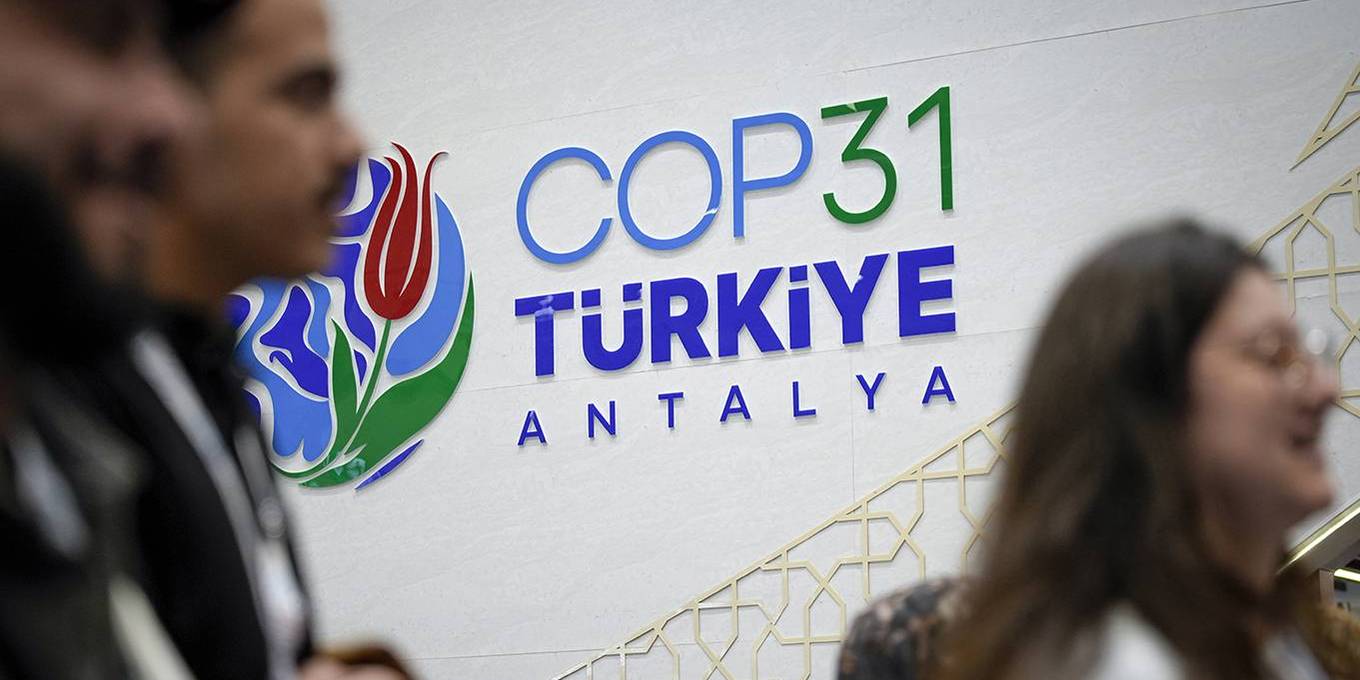
This new analysis comes at an important moment for both Brazil and the international community. Brazilian President Luiz Inácio Lula da Silva’s recent re-election offers an opportunity to build on recent progress and double down on sustainable public procurement practices, alongside other climate policies that the country has revived over the past four years. At the same time, COP31 in Antalya can help maintain momentum behind the Belém Declaration, expanding government participation and reinforcing the connection between international commitments and national action.
The policy brief examines recent lessons from sustainable public procurement in action, drawing on experiences from the city of Recife and the state of Bahia. It also considers lessons from school-feeding programs in Brazil, Scotland, and Sweden, which were the subject of recent case studies by the IIPP. Together, these examples demonstrate that outcomes-oriented policies and procurement are both possible and highly effective.
But procurement alone cannot drive the economy-wide transformation that we need. It works best alongside a mix of supply and demand instruments, and as part of an overarching mission-oriented industrial strategy. In this context, the optimal procurement process requires a whole-of-government approach—which Brazil has undertaken through its Interministerial Commission on Public Procurement for Sustainable Development.
Structured public-private coordination is also necessary. To stimulate innovation, expand sustainable supply, and strengthen market readiness, policymakers must make a conscious effort to promote engagement between government agencies, suppliers, financial institutions, academia, and civil society. Moreover, expanding participation in the Belém Declaration is crucial to mobilize international networks and establish clear implementation strategies, monitoring mechanisms, and accountability frameworks. Last but not least, governments must invest in the capabilities of public institutions and procurement teams, namely through training, digital tools, and knowledge-sharing platforms.
From a global perspective, we need the Belém Declaration to continue building momentum and attracting more signatories, even though signatures are not outcomes. With COP31 ongoing, governments that have already signed the declaration should publish their implementation roadmaps, including their mission targets and plans for monitoring progress. At the same time, more governments—national and local—should join and start sharing their own experiences with sustainable public procurement.
Finally, those overseeing climate finance, including multilateral development banks working with national public banks, should lay out their own plans for explicitly supporting the public-sector capabilities that will enable governments to succeed. The point is not just to commit to sustainability, but to build states able of delivering it.
If this month’s gathering in Antalya is to be remembered as “the implementation COP,” all those in attendance must formally acknowledge that state capacity and capabilities are not an afterthought. They are the infrastructure on which effective climate action depends.
When done right, public procurement can become a strategic instrument for shaping markets and advancing socially desirable goals. By defining the outcomes they want to achieve, governments can create demand for innovative products, encourage investment in sustainable production, and strengthen domestic supply chains. Tackling climate change requires an entrepreneurial state, which rests, in turn, on procurement oriented around outcomes rather than inputs, with governments specifying the problem to be solved rather than the product to be purchased.
As Anna Hope Emerson and I argue in a recent IIPP working paper, climate-oriented procurement is too often treated as a matter of swapping conventional products for greener ones off the shelf. Again, this is a missed opportunity. If leveraged in the service of a broader mission, green procurement could be directing investment, accelerating the diffusion of sustainable technologies and business models, and creating positive externalities across the economy.
This was the idea behind the Belém Declaration. Its significance extends beyond procurement, because it reflects a broader recognition that climate action depends on how governments organize themselves and deploy their economic power.
Specifically, the declaration establishes four complementary principles for advancing sustainable public procurement. The first is to embed environmental and social objectives in all procurement decisions, moving beyond mere compliance-based criteria. The second is to scale up sustainable public procurement by mobilizing public purchasing power across government expenditures to create predictable demand, stimulate investment, and develop sustainable productive capabilities.
Third, governments must foster inclusive engagement by ensuring that procurement involves different stakeholders—including communities affected by the climate crisis—and creates opportunities for a broad range of economic participants. And fourth, governments must strengthen institutional collaboration and learning. By creating channels for sharing knowledge, experience, and tools across agencies and levels of government, policymakers can build the institutional capabilities needed to implement, adapt, and improve sustainable public procurement practices over time.
Together, these principles provide a common framework for translating political commitments into more strategic, inclusive, and outcomes-oriented practices, while allowing governments to adapt implementation to their institutional contexts and priorities.
Building on the efforts we undertook at COP30, our policy brief analyzes the main challenges and opportunities related to implementing the Belém Declaration and scaling up sustainable public procurement.
The Right Time
This new analysis comes at an important moment for both Brazil and the international community. Brazilian President Luiz Inácio Lula da Silva’s recent re-election offers an opportunity to build on recent progress and double down on sustainable public procurement practices, alongside other climate policies that the country has revived over the past four years. At the same time, COP31 in Antalya can help maintain momentum behind the Belém Declaration, expanding government participation and reinforcing the connection between international commitments and national action.
The policy brief examines recent lessons from sustainable public procurement in action, drawing on experiences from the city of Recife and the state of Bahia. It also considers lessons from school-feeding programs in Brazil, Scotland, and Sweden, which were the subject of recent case studies by the IIPP. Together, these examples demonstrate that outcomes-oriented policies and procurement are both possible and highly effective.
But procurement alone cannot drive the economy-wide transformation that we need. It works best alongside a mix of supply and demand instruments, and as part of an overarching mission-oriented industrial strategy. In this context, the optimal procurement process requires a whole-of-government approach—which Brazil has undertaken through its Interministerial Commission on Public Procurement for Sustainable Development.
Structured public-private coordination is also necessary. To stimulate innovation, expand sustainable supply, and strengthen market readiness, policymakers must make a conscious effort to promote engagement between government agencies, suppliers, financial institutions, academia, and civil society. Moreover, expanding participation in the Belém Declaration is crucial to mobilize international networks and establish clear implementation strategies, monitoring mechanisms, and accountability frameworks. Last but not least, governments must invest in the capabilities of public institutions and procurement teams, namely through training, digital tools, and knowledge-sharing platforms.
From a global perspective, we need the Belém Declaration to continue building momentum and attracting more signatories, even though signatures are not outcomes. With COP31 ongoing, governments that have already signed the declaration should publish their implementation roadmaps, including their mission targets and plans for monitoring progress. At the same time, more governments—national and local—should join and start sharing their own experiences with sustainable public procurement.
Finally, those overseeing climate finance, including multilateral development banks working with national public banks, should lay out their own plans for explicitly supporting the public-sector capabilities that will enable governments to succeed. The point is not just to commit to sustainability, but to build states able of delivering it.
If this month’s gathering in Antalya is to be remembered as “the implementation COP,” all those in attendance must formally acknowledge that state capacity and capabilities are not an afterthought. They are the infrastructure on which effective climate action depends.