The Age of Global Un-Order
As crises become more complex, less predictable, and increasingly intertwined, the global system is no longer anchored by shared rules and norms. In a world where the very idea of order has collapsed, governments must learn to navigate radical uncertainty rather than chasing lost anchors of stability.
Mark Leonard, Director of the European Council on Foreign Relations, is the author, most recently, of Surviving Chaos: Geopolitics When the Rules Fail (Polity Press, 2026).
________________________________
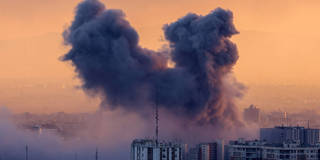
BERLIN—The US-Israeli strike that killed Iran’s supreme leader, Ayatollah Ali Khamenei, and launched the United States’ most consequential Middle Eastern adventure since the Iraq War caught many in Europe off guard. Confronted with a series of cascading crises—from a 1970s-style oil shock to a transatlantic rupture threatening Europe’s security architecture—many analysts have reached the same conclusion: the conflict represents a breakdown of the multilateral system and heralds an era of global disorder.
Yet this interpretation misses something more profound. The Iran war shows what geopolitics looks like when the very idea of order has collapsed, a state of affairs I call “Un-Order.”
The distinction matters. Disorder is what happens when established rules are deliberately broken. To describe a situation as disordered is, paradoxically, to affirm that s hared norms still exist, even as they are violated. Un-order, by contrast, emerges when those norms are overtaken by events and there is no longer a shared understanding of right and wrong, or even of the truth itself. In their place remains a deeper, irreducible uncertainty.
Rather than being governed by shared rules, the international system is now beset by episodic bursts of coercion and retaliation. The Iran war is a case in point: the February 28 strike that killed Khamenei and triggered the current round of regional escalation took place while negotiations were still underway, evoking the surprise attack on Pearl Harbor on December 7, 1941, when Japanese negotiators were still in Washington for talks with the US.
Worse still, international law and institutions have proven largely ineffective in preventing the US, Israel, and Iran from openly flouting core norms against the assassination or kidnapping of political leaders, attacks on civilian infrastructure, and even the long-standing taboo against wars of aggression.
Crucially, the war’s principal actors do not seem to be aware that they are breaking rules at all. When Russian President Vladimir Putin’s tanks rolled into Ukraine in 2022, the Kremlin produced reams of legal justifications for the invasion—an implicit acknowledgment that a crime was being committed. By contrast, when US President Donald Trump threatened to attack Iran’s civilian infrastructure, or when Secretary of “War” (Defense) Pete Hegseth declared that the military would show “no quarter, no mercy,” there was little indication that either man knew or cared that they were advocating the commission of war crimes.
No institutional architecture can function when major actors stop playing by the rules. That is the essence of the distinction between disorder and un-order: one involves breaking rules; the other means that no agreed-upon rules exist.
Polycrisis Is the New Normal
The new age of un-order cannot be attributed to Trump alone, even though his theatricality has come to embody it. He is better understood as a symptom, rather than its primary cause, of a world that has lost its organizing principles. The deeper forces driving this transformation are structural: economic disruptions, climate change, technological advances, and demographic shifts, all converging on the foundations of the existing global order.
As a result, crises are becoming more complex, less predictable, and potentially catastrophic. Rather than simply spreading, they often bleed into one another. In a hyperconnected world, contagion, tipping points, and extreme volatility become the norm. The Oxford economist Ian Goldin has termed this dynamic the “butterfly defect,” using the familiar image of a butterfly flapping its wings on one side of the world and setting off a tornado on the other to illustrate the destructive potential of global interdependence.
A milder version of this dynamic played out during the COVID-19 pandemic, which rapidly triggered a global economic crisis as supply chains seized up and vaccine nationalism deepened geopolitical tensions. Dramatic change often comes from the cumulative impact of smaller disruptions.
The Iran war exemplifies the kind of permanent polycrisis that is likely to define the decades ahead. Rather than a single crisis, it is five: an energy-supply shock, a nuclear-proliferation threat, a regional security breakdown, a global economic disruption, and a transatlantic rupture, all unfolding in rapid succession.
In response to US and Israeli strikes, Iran closed the Strait of Hormuz, driving up global energy, fertilizer, and food prices. Even if the Strait eventually reopens and Trump lifts his own blockade on Iranian ports, the shock will have damaging long-term effects on Asian budgets, European interest rates, and strategic energy reserves worldwide. Should the fragile ceasefire collapse and prices continue to surge, the resulting cost-of-living pressures could boost populist movements across Europe ahead of critical state elections in Germany and next year’s presidential election in France.
To understand why Western responses keep failing, it helps to distinguish between two competing ways of thinking about order. The first could be called the Architect’s Approach. After the fall of the Berlin Wall, leaders in Europe and the US believed they had discovered the ultimate model for organizing the world, placing their faith in a set of rules and institutions designed to maintain global stability.
The fate of that system now hangs in the balance. Since Russia’s invasion of Ukraine, the preservation of the “rules-based order” has become the leitmotif of Western foreign policy, echoed in strategy documents, leaders’ speeches, and the communiqués of G7 and NATO summits. European leaders, in particular, tend to be wary of change, assuming it will undermine rather than strengthen the system. Having benefited most from the existing order, they expect others to embrace it or construct an alternative. In this sense, they think like architects, focusing on the world’s institutional structure.
The Rise of Artisan States
The second way of thinking about international order could be called the Artisan’s Approach. It holds that, in an age of un-order, governments’ primary task is to survive while positioning themselves to benefit from disruption. China is the leading exponent of this view, but the same logic appears to drive many rising powers, from India and Turkey to Saudi Arabia and South Africa.
These states were not among the architects of the current order and have become accustomed to adapting and revising frameworks devised by others. Despite their size and influence, they display the pragmatism and flexibility of artisans—repairing, repurposing, and recombining existing elements to create something new, rather than designing systems from scratch.
Of course, these two analytical models do not always correspond to real-world policymaking. Still, they capture the growing divide between those who make grand plans and those who embrace change and adapt to it. While architects pursue bold visions and are often paralyzed by the gap between design and reality, artisans seek to understand where the world is heading and to make the most of emerging contingencies.
Architects tend to do well in a predictable world. In a complex, constantly shifting geopolitical landscape, however, artisans have an advantage. For decades, international politics has been shaped by Western architects whose expansive visions drove the creation of a global order based on universal institutions and a linear notion of progress. Artisans are better equipped to navigate the radical uncertainty of a world in which no one seems to recognize rules.
Iran’s conduct in its war against the US and Israel is a prime example of an artisan state in action. Stripped of air superiority, conventional military parity, or reliable allies, the Islamic Republic did not attempt to fight the war on America’s terms. Instead, it identified the single point of asymmetric leverage, the Strait of Hormuz, and then relied on its decentralized command structure to adapt to changing conditions.
By closing the Strait instead of pursuing a conventional confrontation it could not win, Iran has transformed the conflict from a military contest into one of economic endurance, in which it clearly has the upper hand. Consequently, backchannel negotiations have come to focus on the Strait itself rather than the issues that drew the US into the war: regime change, Iran’s uranium stockpiles, its missile program, and its support for regional proxies.
At the same time, the US is increasingly constrained by its own architectural assumptions. Paradoxically, while Trump is an instinctive disruptor—an agent of chaos with little patience for institutional frameworks—the military and diplomatic machinery he commands continues to operate according to an architectural logic.
The US entered the Iran war with a set of maximalist objectives that bore little relation to what American military power could realistically deliver. Armed with state-of-the-art AI targeting systems and futuristic tools like the so-called “Ghost Murmur”—a long-range quantum magnetometer that reportedly can trace the electromagnetic signal of a human heartbeat and isolate it from background noise—the US achieved impressive tactical feats. But while cutting-edge technology may have enabled the initial strike that eliminated much of Iran’s senior leadership and the recent rescue of its stranded pilot, when Iran closed the Strait, the Trump administration found itself unable to reconcile its grand ambitions with the reality of Iran’s improvisational defense.
Europe’s Outdated Playbook
One could be forgiven for assuming that Europeans, as architects par excellence, are ill-suited to an age of un-order. They have certainly suffered disproportionately from America’s war in Iran, given their exposure to energy-market volatility. Moreover, European policymaking has also become synonymous with overregulation, endless meetings about meetings, and arguments over the ideal curvature of bananas, rather than decisive action.
But Europe is better equipped for this world than it realizes, as its history, institutions, and political culture reflect deep traditions of adaptation and resilience. The European Union itself was not the product of grand architectural design, nor are the bloc’s prosperity and security the result of a single, carefully executed plan.
Contrary to how it may appear, the European project evolved through continuous trial and error. What began as the Coal and Steel Community grew into a customs union, then a single market, and eventually a monetary union with its own currency. Membership expanded incrementally, from six states to nine, then 12, 15, 25, and finally 27. Some promising initiatives, such as the European Defense Community, failed outright. Others emerged in response to crises: European governments strengthened security cooperation after the Balkan wars, pursued fiscal consolidation in the aftermath of the eurozone debt crisis, expanded public-health collaboration in response to COVID-19, and, most recently, accelerated defense integration following Russia’s full-scale invasion of Ukraine.
The challenge facing Europe today is to tap into that experience and develop an artisan’s code that can guide it through the current crisis in the Middle East and the coming age of un-order. To this end, policymakers should focus on three key priorities.
First, European leaders must accept the reality of un-order rather than chasing a semblance of stability. The sooner they stop reaching for grand frameworks and focus on concrete goals, such as maintaining nuclear nonproliferation and preventing regional crises from triggering systemic economic shocks, the sooner they can develop strategies that actually work. Above all, they must recognize that crises like the war in Iran are no longer problems to be solved, but conditions to be managed.
Second, European policymakers must rethink their approach to interdependence. The closure of the Strait of Hormuz, like the pandemic and the war in Ukraine, has underscored the risks of overreliance on a single supplier or chokepoint. European countries now understand they need to diversify their supply chains, but with migration and technology emerging as arenas of competition, they must also become less squeamish about exercising pressure on others, whether Russia, China, or even the US.
Above all, European countries must take responsibility for their own security. For too long, they have outsourced core functions to external structures—NATO, the World Health Organization, the United Nations—rather than developing their capabilities. The result has been strategic passivity and dependence on American leadership. To survive the age of un-order, Europe will need to boost defense spending and expand its domestic arms industry, strengthen societal resilience, and prepare to act without the US when necessary.
The greatest danger, however, lies in Europe’s outdated playbook. While rules, meetings, and blueprints have served it well for decades, clinging to these tools now risks blinding leaders to the harsh realities of global un-order. The war in Iran is not an aberration; it is the first of many tests.
Mark Leonard, Director of the European Council on Foreign Relations, is the author, most recently, of Surviving Chaos: Geopolitics When the Rules Fail (Polity Press, 2026).
ENLACE A LA NOTA EN PROJECT SYNDICATE: